Showing posts with label Rhubarb. Show all posts

Monday, 6 October 2025

D.T.Brown - Rhubarb Livingstone

OK not quite in my seed box but ordered for the plot 1 allotment in 2021. The growth during the first year was astounding although due to the weather some stalks did go to seed and had to be chopped off. 

By 2022 all three of the plants were in their own beds, when I received the plants, I only had two beds ready, and the third plant was squatting in Rhubarb Bed 1 for a while until I managed to get the third rhubarb bed ready. One does not take any stalks in the first year of growth and the goodness goes back into the plant and helps it establish.  
In 2022 I took about 40% of the stalks late in the season from two of the three plants and have made a number of Rhubarb crumbles, and I have to say I didn't have to add much sugar, as Rhubarb Livingstone is succulent and delicious and well worth the waiting until the second year before harvesting.  
In 2023 without the need of forcing one of the 3 plants to provide an early harvest, I had lots of Rhubarb between March and October. With my wife passing away in January 2023 I don't need as much Rhubarb now, so in 2024 I donated one of my Rhubarb plants to a plot neighbour.  
He didn't take it all and the blessed plant just bounced back in 2025 and I have harvested all three plants hard. 

Below is the technical and sales blurb from the D.T.Brown Rhubarb Livingstone web page that has now been removed as they no longer sell this variety. In 2024 the cost for 3 x 9cm potted plants was £19.90 a saving of £9.95 if you are looking to add Rhubarb to your allotment plot or garden, I can wholeheartedly recommend Rhubarb Livingstone, doing a google search I have found various sources for it.  

Do you enjoy those bright red stems in early summer, but wish the season for sweet, young rhubarb could be longer?  If so, you will want to grow Livingstone which produces its succulent, delicious, stringless sticks from March to October. This outstanding, British-bred strain was achieved by eliminating the summer dormancy which causes rhubarb to stop cropping by the middle of summer. By the way, this breakthrough came about by conventional means and not by any form of genetic modification.

Livingstone really does yield a fine crop of high quality, red-skinned stems through the autumn months, extending the season for this much-loved fruit (well, vegetable actually!).

The disease-free plants will crop heavily once established.  Whether your favourite is rhubarb crumble, rhubarb pie or simply stewed and served with compulsory custard, Livingstone is the variety we have been waiting for.  Supplied in 9cm pots.

'Livingstone' is a compact variety to about 50cm with bright red stems. Unlike other rhubarb varieties, it does not have a dormant period in summer. The main cropping period is early to late autumn, though it can be cropped in summer if required


Sow Indoors
 
Sow / Plant Outdoors
 
Flowers / Harvest


How to grow


CultivationPlant crowns in fertile, well-drained soil in full sun, from late autumn to early spring. Crowns can be cropped for ten or more years, though division may be necessary after about five years. Mulch in spring with a 7cm layer of well-rotted organic matter without burying the crowns, and apply a general fertiliser at 70g/sq m in spring or summer. Water during prolonged dry periods in summer. See rhubarb cultivation

PropagationLift crowns between autumn and early spring (usually in November). Use a spade to divide the crown into sections each retaining a portion of the rhizome (thickened root) and at least one growing point. Sections from the outer part are better than the centres of old plants. Discard any old or decayed parts of the crown. Replant straight away or wrap in damp sacking until ready to plant

Suggested planting locations and garden typesLow Maintenance Patio & Container Plants

How to care

PruningAllow the foliage to die back naturally in winter then cut away the old leaves to expose the growing points to winter cold

PestsAphidsslugs and snails may be problematic

DiseasesHoney fungus and a virus may be troublesome


Tuesday, 6 February 2024

D.T.Brown - Rhubarb Livingstone

OK not quite in my seed box but ordered for the plot 1 allotment in 2021. The growth during the first year was astounding although due to the weather some stalks did go to seed and had to be chopped off. 

By 2022 all three of the plants were in their own beds, when I received the plants, I only had two beds ready, and the third plant was squatting in Rhubarb Bed 1 for a while until I managed to get the third rhubarb bed ready. One does not take any stalks in the first year of growth and the goodness goes back into the plant and helps it establish.  
In 2022 I took about 40% of the stalks late in the season from two of the three plants and have made a number of Rhubarb crumbles, and I have to say I didn't have to add much sugar, as Rhubarb Livingstone is succulent and delicious and well worth the waiting until the second year before harvesting.  
In 2023 without the need of forcing one of the 3 plants to provide an early harvest, I had lots of Rhubarb between March and October. With my wife passing away in January 2023 I don't need as much Rhubarb now, so in 2024 I'm going to donate one of my Rhubarb plants to a plot neighbour.  

Below is the technical and sales blurb from the D.T.Brown Rhubarb Livingstone web page at the time of updating this post the cost for 3 x 9cm potted plants is £19.90 a saving of £9.95 if you are looking to add Rhubarb to your allotment plot or garden, I can wholeheartedly recommend Rhubarb Livingstone.  

Do you enjoy those bright red stems in early summer, but wish the season for sweet, young rhubarb could be longer?  If so, you will want to grow Livingstone which produces its succulent, delicious, stringless sticks from March to October. This outstanding, British-bred strain was achieved by eliminating the summer dormancy which causes rhubarb to stop cropping by the middle of summer. By the way, this breakthrough came about by conventional means and not by any form of genetic modification.

Livingstone really does yield a fine crop of high quality, red-skinned stems through the autumn months, extending the season for this much-loved fruit (well, vegetable actually!).

The disease-free plants will crop heavily once established.  Whether your favourite is rhubarb crumble, rhubarb pie or simply stewed and served with compulsory custard, Livingstone is the variety we have been waiting for.  Supplied in 9cm pots.

'Livingstone' is a compact variety to about 50cm with bright red stems. Unlike other rhubarb varieties, it does not have a dormant period in summer. The main cropping period is early to late autumn, though it can be cropped in summer if required


Sow Indoors
 
Sow / Plant Outdoors
 
Flowers / Harvest


How to grow


CultivationPlant crowns in fertile, well-drained soil in full sun, from late autumn to early spring. Crowns can be cropped for ten or more years, though division may be necessary after about five years. Mulch in spring with a 7cm layer of well-rotted organic matter without burying the crowns, and apply a general fertiliser at 70g/sq m in spring or summer. Water during prolonged dry periods in summer. See rhubarb cultivation

PropagationLift crowns between autumn and early spring (usually in November). Use a spade to divide the crown into sections each retaining a portion of the rhizome (thickened root) and at least one growing point. Sections from the outer part are better than the centres of old plants. Discard any old or decayed parts of the crown. Replant straight away or wrap in damp sacking until ready to plant

Suggested planting locations and garden typesLow Maintenance Patio & Container Plants

How to care

PruningAllow the foliage to die back naturally in winter then cut away the old leaves to expose the growing points to winter cold

PestsAphidsslugs and snails may be problematic

DiseasesHoney fungus and a virus may be troublesome


Wednesday, 7 September 2022

D.T.Brown - Rhubarb Livingstone

OK not quite in my seed box but ordered for the plot 1 allotment in 2021. The growth during the first year was astounding although due to the weather some stalks did go to seed and had to be chopped off. 

By 2022 all three of the plants were in their own beds, when I received the plants, I only had two beds ready, and the third plant was squatting in Rhubarb Bed 1 for a while until I managed to get the third rhubarb bed ready. One does not take any stalks in the first year of growth and the goodness goes back into the plant and helps it establish.  
In 2022 I have taken about 40% of the stalks late in the season from two of the three plants and have made a number of Rhubarb crumbles, and I have to say I didn't have to add much sugar, as Rhubarb Livingstone is succulent and delicious and well worth the waiting until the second year before harvesting.  
In 2023 without the need of forcing one of the 3 plants to provide an early harvest, I will have Rhubarb between March and October.   

Below is the technical and sales blurb from the D.T.Brown Rhubarb Livingstone web page at the time of updating this post the cost for 3 x 9cm potted plants is £17.90 a saving of £8.95 if you are looking to add Rhubarb to your allotment plot or garden, I can wholeheartedly recommend Rhubarb Livingstone.  

Do you enjoy those bright red stems in early summer, but wish the season for sweet, young rhubarb could be longer?  If so, you will want to grow Livingstone which produces its succulent, delicious, stringless sticks from March to October. This outstanding, British-bred strain was achieved by eliminating the summer dormancy which causes rhubarb to stop cropping by the middle of summer. By the way, this breakthrough came about by conventional means and not by any form of genetic modification.

Livingstone really does yield a fine crop of high quality, red-skinned stems through the autumn months, extending the season for this much-loved fruit (well, vegetable actually!).

The disease-free plants will crop heavily once established.  Whether your favourite is rhubarb crumble, rhubarb pie or simply stewed and served with compulsory custard, Livingstone is the variety we have been waiting for.  Supplied in 9cm pots.

'Livingstone' is a compact variety to about 50cm with bright red stems. Unlike other rhubarb varieties, it does not have a dormant period in summer. The main cropping period is early to late autumn, though it can be cropped in summer if required


Sow Indoors
 
Sow / Plant Outdoors
 
Flowers / Harvest


How to grow


CultivationPlant crowns in fertile, well-drained soil in full sun, from late autumn to early spring. Crowns can be cropped for ten or more years, though division may be necessary after about five years. Mulch in spring with a 7cm layer of well-rotted organic matter without burying the crowns, and apply a general fertiliser at 70g/sq m in spring or summer. Water during prolonged dry periods in summer. See rhubarb cultivation

PropagationLift crowns between autumn and early spring (usually in November). Use a spade to divide the crown into sections each retaining a portion of the rhizome (thickened root) and at least one growing point. Sections from the outer part are better than the centres of old plants. Discard any old or decayed parts of the crown. Replant straight away or wrap in damp sacking until ready to plant

Suggested planting locations and garden typesLow Maintenance Patio & Container Plants

How to care

PruningAllow the foliage to die back naturally in winter then cut away the old leaves to expose the growing points to winter cold

PestsAphidsslugs and snails may be problematic

DiseasesHoney fungus and a virus may be troublesome


Saturday, 7 May 2022

First Early Spuds & Runner Beans

I found a tray of Caledonian Pearl - First Early from Suttons behind some fleece in the greenhouse on plot 1A yesterday and this afternoon I dashed to the allotment to get them in flower buckets.

Four potatoes in each bucket, this is a photo of the second layer, I used a mixture of coir, soil and Gro-Sure Multi Purpose compost, plus some D.T.Browns potato fertiliser.


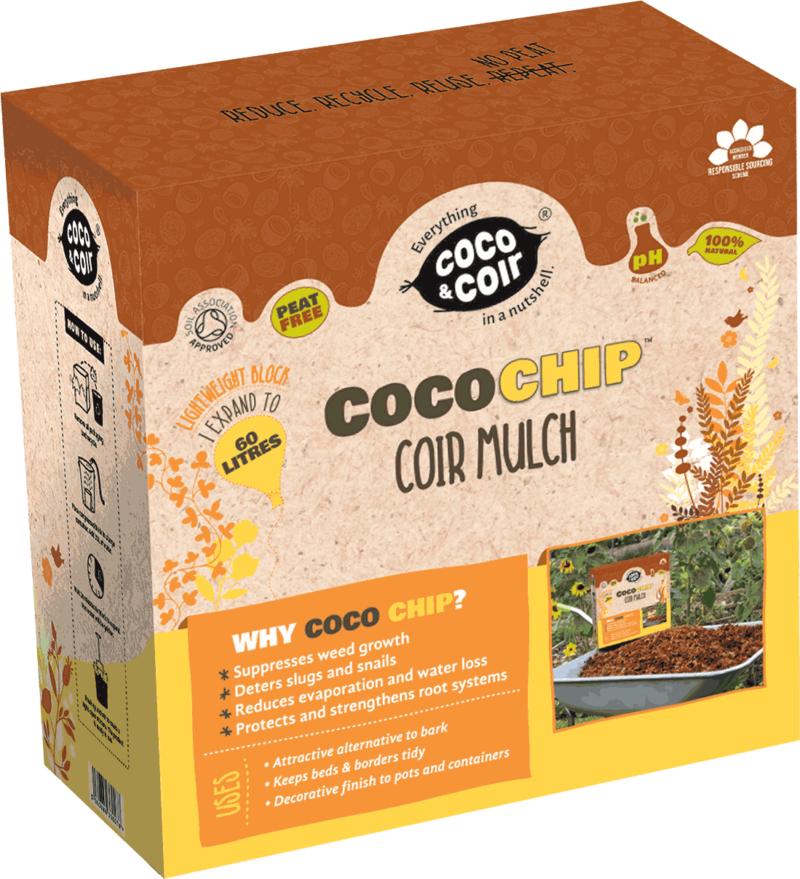
Coir Mulch when I had to come home, two square flower buckets worth in the greenhouse. If it rains it will only help the hydration of this block.


Close view of the Coir chips


Coco Coir Mulch - D.T.Brown

Natural and 100% PEAT FREE - made from 100% Natural Coconut husks, after harvesting, it is stored, ground, washed, dried, and compressed. Coco Coir is a natural by-product of the coconut farming industry and causes minimal impact on the environment and it is the most environmentally friendly alternative to peat moss.

Natural, 100% coir husk chips. This mulch product increases the porosity and enriches soil and retains moisture around plants. Breaks down slowly in the soil to improve structure. Reduces weed growth up to 90% and helps to deter slugs and snails.

How To Use It:
Simpy put your compressed Coco Coir Mulch brick in a container, add 22.5 litres of water and let it sit until the water is absorbed (approx. 20min). Fluff it up and you are ready to use it.

Key Benefits:
- 100% peat-free
- pH and nutrient balanced
- Sustainable and environmentally friendly, from natural renewable sources, biodegradable
- Easy to handle, uniform in composition, odourless
- Better water retention, long lasting
- Provides good drainage / good aeration
- Free of bacteria and weed seeds
- Increases the porosity and retains moisture
- Improves the soil structure
- Reduces the weed growth and deters slug and snails

Size: 30 x 13 x 30cm when compressed. Add 22.5 litres of water and it will expand to 60ltr of Peat Free Coco Chip Mulch - pH value 5.5 -6.8


,,,

First Early Potatoes


Caledonian Pearl - First Early - Potatoes from Suttons in the six flower buckets.


D.T.Brown Rhubarb Livingstone going to seed already. 
I think I need to water this a little more often than I have been.
 

D.T.Brown Rhubarb Livingstone with bindweed growing in the corner, but not for long. 


Runner bean trench weeded and runner beans "Best of All" from Suttons sown directly in front of the bamboo poles and watered in.

Heavy crop of medium length pods in large clusters. Can be picked over a long season.

Sow in April under glass or cloches, or outdoors in May and June. Prolific, decorative plants thriving in well cultivated soils containing plenty of humus.  
Regular watering in dry periods will be amply rewarded by a heavy crop of delicious, tender young beans for table and freezing. (12-16 weeks maturity.) Packet sufficient for a double row of approximately 4.5m (15')

Friday, 4 March 2022

Clearing The Old Leaf Bin Area


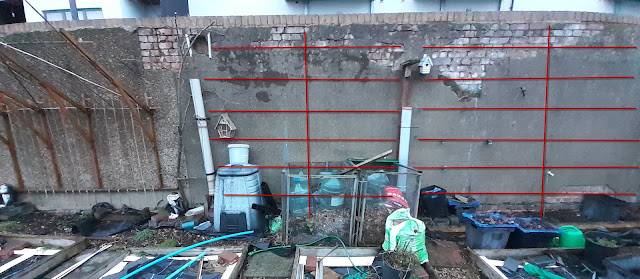
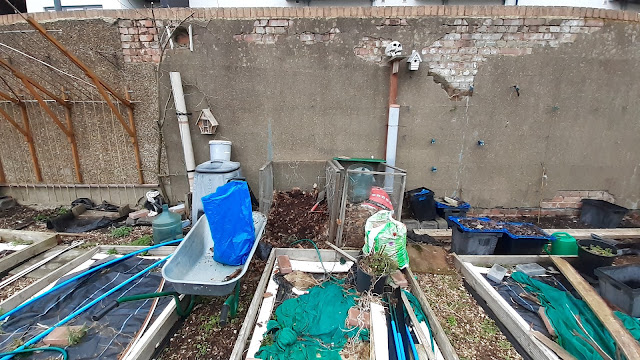
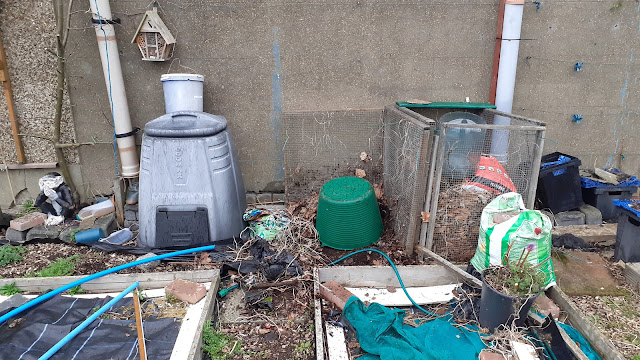
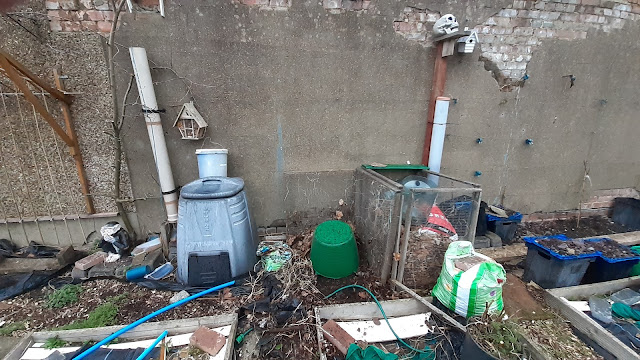
As mentioned previously the old leaf bins and Dalek needs to be relocated so that the Grapevine (Vitis) Lakemore from Suttons  can be planted between the two comfrey pipes.


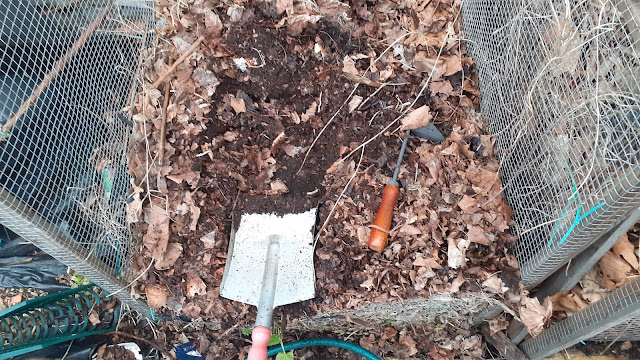
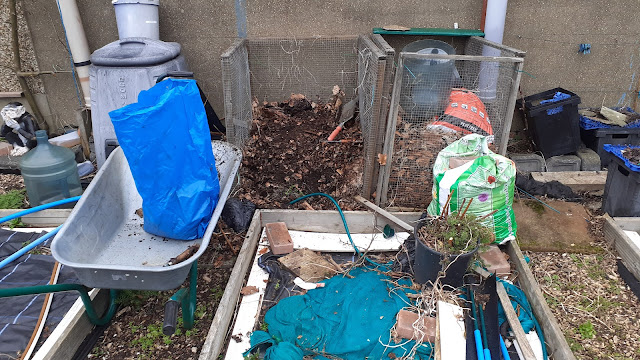
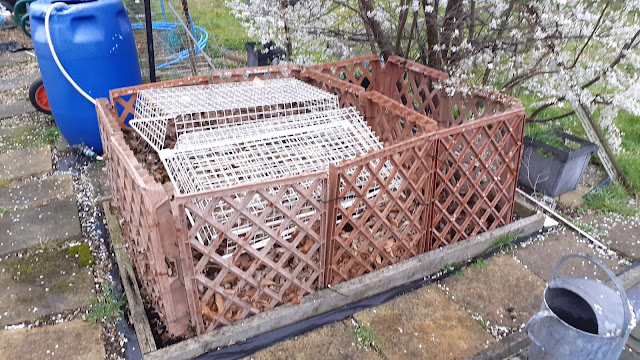
The front of the Mesh cube was removed to give me access to the leaf mould, It's amazing that the leaf's on the very outside of the bin don't appear to degrade where as those in the middle of the pile have turned into a beautiful dark leaf mould


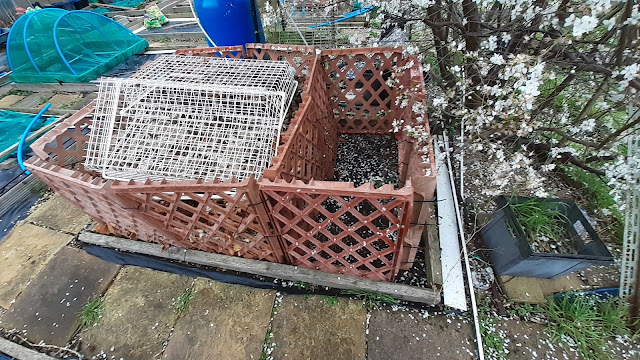
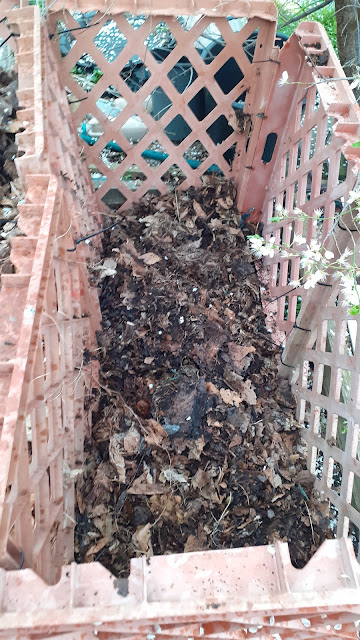
Using large cable ties I rebound the side of the leaf cage and then using four more bottoms of bread trays I formed an extension to the new leaf bin behind the plum tree, to take the material from the old leaf bins that is not quite ready yet. 


With the front panel removed I worked at the leaf mould, removing anything that had not decomposed and gradually bagged up using a small coal shovel, and as many bags as I could find. 


The new grape vine will go between the two Comfrey pipes so once the leaf bin is empty I can plant the vine before removing the other leaf bin on the right.


The odd twigs that have not decomposed will be added to one of the compost bins.


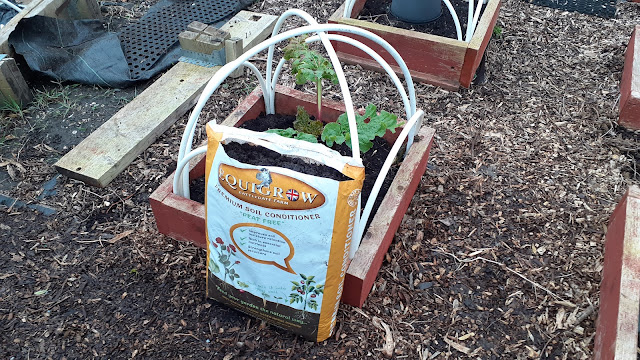
I needed more sacks so I decided to top up the Rhubarb with some of the Equigrow Premium Soil Conditioner as it's made with horse manure, and is full of nutrients that will be beneficial to my plants. 


As I was getting deeper into the pile the better the leaf mould was becoming.


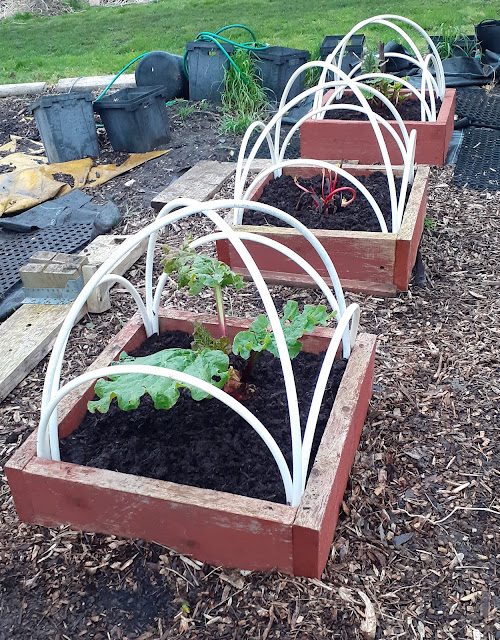
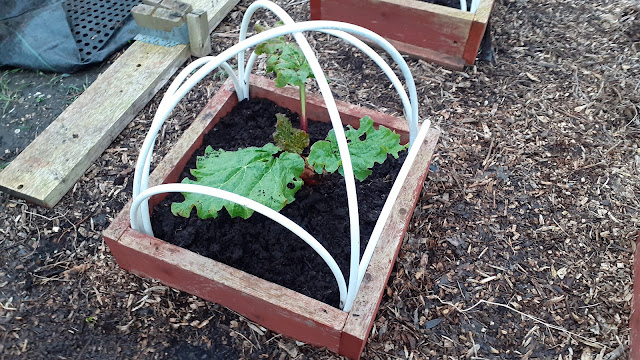
Rhubarb beds after adding the Equigrow Premium Soil Conditioner, which I must say looks lush in the beds, and will help feed my Rhubarb Livingstone from D.T.Brown.


Nice to see early new growth


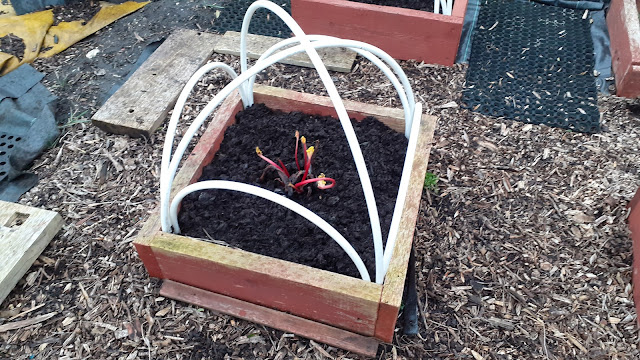
The middle Rhubarb looked dead so I've had a pot over it for a couple of weeks to force it. I left the pot off now I know it's still alive.


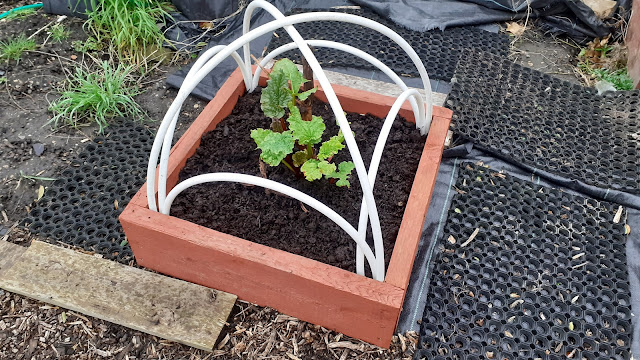
The last bed to be made, you can tell because the frame is still red, and the last plant moved into it's final bed appears to be very happy and putting on good growth. I can actually take some sticks of rhubarb Livingstone this year to eat.


New leaf Bin now with a rear extension. The main bin has been filled to over capacity a number of times and it has dropped. originally the cages were on the top to stop the leaf's blowing away in the wind. 


Material from around the outside of the original bin placed in the extension to the new leaf.


Side panel removed and getting near the bottom of the bin, I had run out of time and needed to get back to Jen before Kelly left for the night.


I'm quite happy with what I managed in a couple of hours and weather permitting I will try and get another couple of hours on the plot on Monday. 

Spot the skull ......