Showing posts with label Marshalls. Show all posts

Friday, 19 June 2026

My Two Sacks Of Vermiculite Arrive.


I purchased two 100L sacks of Sinclair Horticultural Grade Vermiculite, from Marshalls Gardens and the sack were delivered today  

Vermiculite is porous so it helps retain water nutrients in the soil for release to plants. Vermiculite is a natural, non-toxic mineral that is lightweight and has thermal insulation properties which makes it ideal for use as a pot topper.


It's going into the mix I'm using for the raised beds, However I will not be using a 1/3 of the volume required per bed as it too bloody expensive. £37.99 for a 100L sack. When I bought it for my first Square Foot Garden (SFG) Beds on the allotment it was somewhere between £21 - £24 a sack. 

Friday, 27 December 2024

In My Seed Box For 2025 - Sweetcorn


My daughter Kelly declared early on in my ownership of an allotment that all sweetcorn grown was hers. Historically we have had some great harvests and the two types of corn that I have grown between 2013 - 2019 have been Swift and Lark F1. 2017 was extremely disappointing but it would appear that most people in the UK had a bad year with their Sweetcorn. 

In 2019 Marshalls sent me two different varieties to trial which were Alliance F1 and Tyson F1 again due to the leg injury I didn't get the infrastructure in to trial both varieties in 2019. 

The results with Marshalls Alliance F1 Hybrid Sweetcorn were nothing more than spectacular (see photos of harvest here) and I have to say they were the best Sweetcorn that I have grown to date, Tyson F1 grown in 2021 were good but not as good as Alliance. 

In 2022 I attempted to grow Marshalls Moonshine F1 - 50 Seeds - £2.99 - packed year ending 03/21 and best before date 09/2022 The germination rate was less that 40% and what did finally grow got hit by the rats with fluffy tails that run along the top of the wall that's built on my plot boundary.

A second planting of Sweetcorn Picasso F1  - 35 Seeds - a New Variety to Mr Fothergill's in 2022 was tried, the germination rate was poor and then the rats with fluffy tails hit regardless of the pop bottles I had placed over the corns and I ended up with only 8 corns that were viable. Worst year for sweetcorn ever. 

In 2023 I tried growing Sweet Corn Illusion F1 - 25 Seeds - a new variety from Dobies & Sweet Corn Eden F1 - Suttons Germination rates were down, but once again the rats with fluffy tails just beat us to some of the sweetcorn and our harvests were as good as in previous years.

I still have Sweet Corn Pot Of Gold F1 - Suttons - 20 Seeds - Cost £4.99 - Item Code 10 02 99 - that was Packed year ending 2023 and has a Sow By 2026 date. 

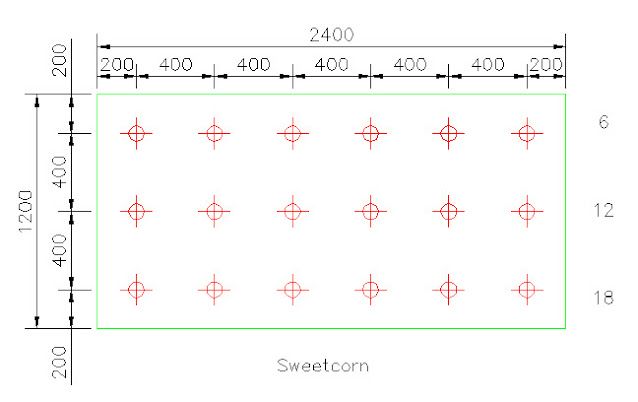
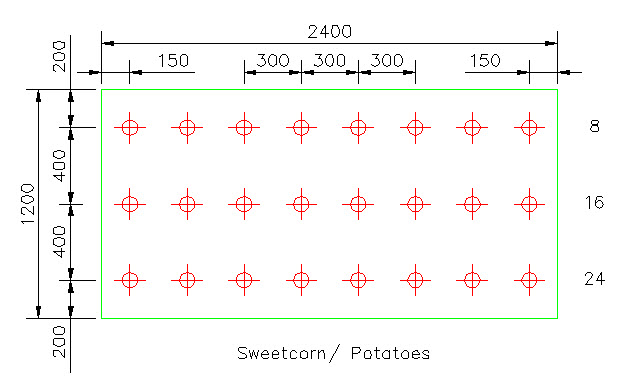
A 21 hole planting sheet would be ideal if there is 100% germination, 18 hole works for a 90% germination rate.

I have been sent a new variety of sweetcorn from Suttons Seeds who have added the variety to its catalogue for 2025 called Sweet Start F1 - Average Pack 30 Seeds - 3.99  

Depending on the germination rate I can use 2 number 18 hole planting membrane sheets in two beds or one 24 sheet membrane in a single bed, if a germination rate of 80% achieved . 


Marshalls have kindly sent me a pack of their Mira Picnic F1 Sweetcorn seeds that are new for 2025 with a RRP of £3.99 for 20 seeds. 

Sow March to May and Harvest August to September. Succulent and sweet, it can be eaten raw as a tasty snack! Medium-sized cobs packed with supersweet kernels, great for the barbecue. Early-maturing variety. 

 
Planting Membrane for Sweetcorn 

I have 3 different planting membranes that can be used for sweet corn they are 18, 21 & 24 holes and look like this 


Sunday, 22 December 2024

Marshalls New Vegetable Seeds For 2025

If you look on the Marshalls Web Site at the moment the New Vegetable Seeds that are showing are those for 2024. The 2025 edition V of the Little Book of Seeds show a few varieties that are being introduced in 2025

There are however more new varieties than those highlighted on pages 4 & 5. 

Below is a list of all of the new varieties of vegetables for your consideration, that I have found flicking through the 2025 catalogue with page number, code & product Description. 

Personally I love to trial new varieties as they are released, and it's one of the things I do when I get any new catalogue, is to seek out the new varieties that have been added each year. 

10   10303023   Broadbean Duet

11   10303022   Haricot Bean Golden Gate

12   10303021   Dwarf French Bean Martini

24   10303014   Spring Green Winter Jewel

37   10202228   Gherkin Partner

39   10202994   Basil Everleaf Emerald Towers

29   10203009   Sorrel – Red Veined

43   10303017   Lettuce Adelita II (baby Leaf)

43   10303016   Lettuce Crispita II (baby Leaf)

48   10203003   Onion White Star

48   10203000   Onion Walla Walla

59   10303018   Chilli Peppers Havana Gold

61   10303024   Pumpkin Fireball

61   10303029   Pumpkin Lil Pump Ke Mon

61   10303012   Mini Pumpkin Mix

63   10303015   Spinach Nevada

64   10203008   Squash Bush Delicata

70   10203001   Bush Tomato Orangeto

73   10202995   Plum Tomato Black Moon

73   10303019   Plum Tomato Pink Tiger

74   10203010   Salad Tomato O’ Happy Day

75   10303011   Beefsteak Tomato Buffalo Steak

93   10806057   Asparagus Bacchus 5 crowns

93   10806056   Asparagus Bacchus 10 crowns

93   10806050   Asparagus Javelin 5 crowns

93   10806049   Asparagus Javelin 10 crowns

93   10804048   Asparagus Erasmus 5 crowns

93   19006052   Asparagus Erasmus 10 crowns

Thursday, 19 December 2024

Marshalls Garden Little Book of Seeds Vol V 2025


One of the rewards for being an Allotment and Gardening Blogger is that one acknowledged as being Gardening Press, and as such we get press releases and early copies of catalogues, brochures and seeds to trial, in addition to the annual invites to the Gardening Press Event in London each year. 

I have to say the 2025 version of the Little Book Of Seeds is as informative as usual, but for 2025 Marshalls have a few new initiatives they are implementing. 

They are introducing The Enhanced Collection that encompasses some tried and tested favourite varieties of vegetable seeds that most of us have enjoyed growing but with improvements to make grown crops eve more successful. 

These improvements or as they say in their Little Book Of Seeds, Benefits include improved yields, greater disease resistance, improved flavour, improved vigour and strength and much more. I'm not sure what the much more are apart from marketing terms, but I will take the identifiable benefits as they are always useful to have. 

There is a symbol throughout the catalogue and an example of four varieties on page 6, and the four seed packs sent to me to trial from The Enhanced Collection are shown in the photo at the top of this article. The link above takes you to where you can find out more about the contents of this collection and what seeds you might want to try next year. 

Inside the front page there is a notification that for 2025 Marshalls are introducing a new lower P&P rate of just £1.95 for `seed only' orders.

On Page 3 no naked pin-up, but an offer to add a seed wheel of your choice that normally retails at £4.99 that can be added to a any order for just £1 using code WHEEL when ordering online. I have two version of this wheel for vegetables of different diameters and ages in my potting shed on the allotment.

Between pages 34 & 35 is a Seed Sowing Calendar of what seeds to plant each month that is really useful for new allotment owners, and it's a common question on many Facebook gardening groups.  

I will be looking at the catalogue and producing a post about all the new varieties for 2025 in early January.

I will be posting more about the Little Book Of Seeds in the coming days, especially if its raining and I cant get down to the allotment.       

Thursday, 31 October 2024

How To Grow Onion Shallot and Garlic

It's a good time to buy Onions from Marshalls

Guidance supplied by Marshalls  

Every kitchen should have fresh supply of Onions, Shallots and Garlic, adding intense flavours to a huge range of kitchen dishes. Growing them is a pleasure and simple to do. Follow these guidelines for your own harvest of these delicious and versatile vegetables. Planting sets and cloves will give you a great harvest but can be slow to establish and birds do like to pull at them to get to the earthworms below, that have been attracted by the explosion of microbial activity in the rootzone. Using pre-rooted sets and cloves gets the plants off to a quicker start, leading to larger and earlier crops. Plus a lot harder for the birds to pull them up too!

Prepare the soil: Onions, Shallots and garlic prefer an open, sunny site and light, free-draining soil. If you have heavy soil, dig a generous amount of grit and organic matter into the planting area to ensure better drainage. Avoid planting in very heavy or freshly manured soil. Onions are sensitive to acidity, so if you have acid soil add some Garden Lime to the area well before planting, or a Pre-planting Onion, Shallot and Garlic Fertiliser.

Planting: Both autumn and spring varieties can be planted straight outside into prepared soil. Loosen the soil and dig in some Pre-planting Fertiliser for added nutrients.

Plant onion and Shallots with the tips of the sets showing at the soil surface. Onions should be spaced 5-10cm (2-4in) apart with 25-30cm (10in to 1ft) between rows, and shallots 15-20cm (6-8in) with 30-45cm (1ft to 18in) between rows.

Garlic cloves should be planted so the tip of each clove is 2cm (1/2in) below the soil surface. We suggest leaving 15cm (6in) between individual cloves and 30cm (12in) between rows. Plant pre-rooted plugs deeper than the plug they are grown in.

Aftercare: During the growing season, water if the weather is dry and give an occasional feed with a general liquid fertiliser, and keep the area weed free. Keep the water going in especially towards harvest time, as the bulbs can almost double in size in the last 4-6 weeks before harvest.

You might not know, but hardneck garlic varieties may produce a curly flower stem (commonly known as a scape) and cutting this off can increase the bulb size. The scape has a fresh, garlicky flavour that is absolutely perfect for stir fries!

Harvesting: Onions and Shallots can be lifted fresh in summer as soon as they reach a useable size, however if you’re harvesting for storage we recommend waiting until the foliage bends over and dies down naturally before lifting.

When harvesting garlic, we’ve found that a good indication is when their foliage starts to turn yellow and wither. Use a fork to gently remove the bulbs from the ground.

To lift, you should ease your bulbs out of the ground and allow them to dry outside for a couple of weeks (if the weather is fine) or in a well-ventilated greenhouse or shed.

Storing: Onions, shallots and garlic are ready for storage when the skins are completely dry and papery. They should be kept in a light, cool and well-ventilated place. Onions can be braided into long bunches and hung up to improve length or harvest and look great too!

Pests and Diseases: Onions are prone to various fungus-borne diseases, so we recommend trying to rotate their growing position each year so you’re not planting in contaminated soil.

Here are some of the most common pests and diseases to look out for!

Rust disease – Rusty spots form on both sides of infected leaves and break open to release dusty, orange airborne spores. Severe attacks may cause the leaves to shrivel prematurely and will reduce vigour.

Unfortunately, there is no solution or cure to rust disease. We recommend keeping a close eye out for the signs and removing and destroying any infected plants to help it spreading.

Onion white rot – The leaves will start to turn yellow and wilt, which prevents the bulbs from forming properly. A good way to tell if the bulbs have been infected is they will have white, fuzzy spots.

We recommend watching out for rot and removing any infected bulbs from the area to prevent it spreading.

Onion fly – The leaves will start to wilt and turn yellow, preventing the bulbs from developing. Onion fly can affect garlic and leeks as well as onions. The larvae of onion fly live in the soil and eat the roots of the bulb, eventually burrowing into the bulb itself.

Protect your crops with Insect Netting. However, if you do have issues with onion fly, we recommend simply discarding any bulbs.

Onion downy mildew – The leaves will begin to turn yellow and die off from the tip downwards. In wet weather, white mould develops on dead parts often turning a darker colour later. Remove and destroy any affected bulbs.

Onion neck rot – This fungal disease can occur in storage. We have found that to avoid neck rot, you should water regularly and stop feeding in August, in addition to keeping your crops dry after harvesting.

Monday, 28 October 2024

Pre Rooted Onion 'Radar' Sets & Garlic 'Rhapsody Wight' Cloves Planted

Pre Rooted Onion 'Radar' Sets & Garlic 'Rhapsody Wight' Cloves from Marshalls planted into Square Foot Gardening Bed 2 this morning and the woodchip path extended to my allotment entrance. #marshallsgarden

No slugs found in the beer trap on the raised bed or around it. I was hoping to find lots of slugs had bit the dust.  


Marshalls Onion Garlic & Shallot Feed concentrated and specially formulated for garlic and other alliums, slow release fertiliser which is high in trace elements. This should ensures strong bulb development and growth, early ripening and maturity, good skin and bulb firmness sprinkled over the bed. NPK:12:11:18, with trace elements (nitrogen, nitrate, phosphorous, sulphur, copper and calcium).

Ryobi drill and power planter mixed in the Marshalls, Richmoor Compost, Marshalls Onion Garlic & Shallot Feed and original Mel's Mix.

I marked the timber at 200mm either side to give me lines to work off. No hole large enough to push the onions out of the module so I used my little extraction tool and mini trowel

Next I installed the watering irrigation pipe.


Then I transplanted the second row of onions.


Closer view of the onions


Next it was the turn of the Garlic to be potted into place either side of the watering pipe.


Closer view of the Garlic before going into the ground


Garlic potted in deeper than the onions


Garlic and Onions Sets transplanted into SFG Bed 2 


Watered in and covered with debris netting to stop the birds or squirrels pulling them out.

Woodchip path extended over the dumper ruts in the main path in an attempt to stop mud building up on my surgical shoe. 

Sunday, 27 October 2024

Getting SFG Bed 2 Ready For Pre-rooted Garlic Cloves and Onion Sets


Marshalls have kindly sent me some of their Pre Rooted Onion 'Radar' Sets & Garlic 'Rhapsody Wight' Cloves to trial over winter, along with a 44L sack of Organic Compost and 900g of Onion, Garlic & Shallot Feed Slow release Granules to trial

Beetroots and one loan sweet potato harvested from SFG Bed 2 today
This SFG bed was full to the top earlier this year when I extended it and it has sunk 4" or 100mm
4 sacks of Richmoor Compost that I picked up yesterday added to SFG Bed 2


44L sack of Marshalls Organic Compost added to the middle of the bed and spread out.

Beer traps put in the middle of the bed and around each side.
Tomorrow I will take my power planter to mix the Marshalls Organic Compost Richmoor compost and the original Mels Mix. I may take some crushed egg shells and add that to the mix as well.


Beetroots and one loan sweet potato harvested from SFG Bed 2 today


This bed was full to the top earlier this year when I extended it and it has sunk 4" or 100mm


4 sacks of Compost that I picked up yesterday added to SFG Bed 2. John arrived and saw me struggling with the sacks and grabbed a couple off the pile for me and left them on the bed for me to empty. I love my plot neighbours they are so helpful and kind.


Bed looking much better for the 4 sacks or 160 Litres of Richmoor Organic Compost that was added. 44L sack of Marshalls Organic Compost added to the middle of the bed. Another 4L but was significantly lighter than the Richmoor compost. And one can defiantly smell the farmyard manure in it.


44L sack of Marshalls Organic Compost added to the middle of the bed


44L sack of Marshalls Organic Compost added to the middle of the bed gradually spread out over the bed.


Slug Traps around the bed and one in the bed to hopefully catch the slugs and snails that have been attacking my beetroots

Saturday, 26 October 2024

Pre-Rooted Onion 'Radar' Sets & Garlic 'Rhapsody Wight' Cloves

Marshalls have kindly sent me some of their Pre Rooted Onion Sets & Pre Rooted Garlic Cloves to trial over winter, along with a 44L sack of Organic Compost and 900g of Onion, Garlic & Shallot Feed Slow release Granules to trial 


Pre-Rooted Onion Radar Sets

Onion Radar set are particularly resistant to bolting and is superb when eaten fresh & stores well into the autumn.

Key Features

·          Bolt resistant

·          Prefers full sun

Pack Contents: 12 Pre-Rooted Sets £6.99 


·         Superb when eaten fresh & stores well into the autumn.

Radar onion sets are an improved Japanese variety, perfect for autumn planting when they can be harvested from late May. Radar is loved for its mild flavour storage potential; under the right conditions, it will store for about a year. A good variety with resistance to bolting.

Pre-Rooted Sets

Grow bigger, stronger onions ready to harvest earlier in the season with our pre-rooted onion sets! Our innovative NEW format is ideal for Autumn planting and for gardeners with small plots.

Do you know why birds like to pull up your freshly planted onions, it isn't just to see your angry face! No, it is because they are after the earthworms that in turn are attracted to microbes present in the immediate area around the rooting called the Rhizosphere. Microbes feast on the proteins, sugars and dead cells created from the plants roots. However, as these are pre-rooted the birds will find them harder to pull up and should leave them alone. The microbes in turn, provide the plants with essential nutrients and so the cycle continues.

To give you a head start on the growing season, we’ve pre-rooted onion sets into plug trays. Unlike normal sets, which take several weeks to start growing after being planted, these pre-rooted plugs are already rooted and growing when you receive them, ready to plant out. They’ll establish quickly, producing bigger, stronger plants earlier than traditionally planted sets, with less risk of birds or animals pulling out the sets.

Our pre-rooted onion sets are great for gardeners with small plots who only have space for a few plants and don’t want to waste a big bag of sets. There’s no more waiting to see whether all your sets will sprout – you can already see them growing! And if you missed your chance to plant sets earlier in Autumn, these pre-rooted sets are already ahead and no time is lost.


Pre-Rooted Garlic 'Rhapsody Wight' 

This softneck garlic variety features large, bright bulbs with deep purple streaks and will add a fresh, zingy flavour to your favourite recipes.

Key Features

·          Perfect for pots and containers

·          Prefers full sun

Pack Contents: 12 Pre-Rooted Sets £ 


·         Softneck variety

Garlic 'Rhapsody Wight' is a softneck variety that features large, bright bulbs with deep purple streaks and a mottling effect. The bulbs will lift themselves up out of the ground as they grow, ready for harvest.

Historically, 'Rhapsody Wight' originates from the south west of France, and is known as 'en primeur'; the first true garlic of the season. This fresh, zingy variety is full of flavour and is perfect for adding to many delicious recipes. It most definitely deserves the name “Rhapsody”; an ecstatic expression of feeling!

Pre-Rooted Sets

Grow bigger, stronger garlic ready to harvest earlier in the season with our pre-rooted garlic sets! Our innovative NEW format is ideal for Autumn planting and for gardeners with small plots.

Do you know why birds like to pull up your freshly planted onion and garlic, it isn't just to see your angry face! No, it is because they are after the earthworms that in turn are attracted to microbes present in the immediate area around the rooting called the Rhizosphere. Microbes feast on the proteins, sugars and dead cells created from the plants roots. However, as these are pre-rooted the birds will find them harder to pull up and should leave them alone. The microbes in turn, provide the plants with essential nutrients and so the cycle continues.

To give you a head start on the growing season, we’ve pre-rooted garlic sets into plug trays. Unlike normal sets, which take several weeks to start growing after being planted, these pre-rooted plugs are already rooted and growing when you receive them, ready to plant out. They’ll establish quickly, producing bigger, stronger plants earlier than traditionally planted sets, with less risk of birds or animals pulling out the sets.

Our pre-rooted garlic sets are great for gardeners with small plots who only have space for a few plants and don’t want to waste a big bag of sets. There’s no more waiting to see whether all your sets will sprout – you can already see them growing! And if you missed your chance to plant sets earlier in Autumn, these pre-rooted sets are already ahead and no time is lost.

Planting Garlic

Prepare the ground with our Pre-Planting Onion, Garlic & Shallot Fertiliser to ensure strong bulb development and growth, early ripening and maturity, good skin and bulb firmness.

Place the cloves in the soil with their tips around 2.5cm (1in) below the surface. Space them about 15cm (6 inches) apart. Keep rows around 30cm (12 inches) apart.

If the weather is particularly wet, or soil very heavy, start cloves in modules in a greenhouse or under other protection until conditions improve..

Garlic is easy to grow and can be planted in autumn or spring, with the former usually producing bigger bulbs. It can be used freshly harvested, or dried off and stored for later on.

For best results, look for varieties adapted to the UK climate and certified disease resistant.

Where to grow garlic

Choose a sunny, slightly sheltered site with free-draining alkaline soil on which onions and garlic haven’t been grown for at least three years to avoid build ups of disease.

How to prepare the soil for garlic

Dig over the ground to remove weeds and add plenty of well-rotted compost, which will increase nutrients and help retain moisture. Dig in some general purpose fertiliser if the soil is poor. Increase the chances of a successful crop on acid soil by adding lime to increase its pH.

How to plant garlic

Place the cloves in the soil with their tips around 2.5cm (1in) below the surface. Space them about 15cm (6 inches) apart. Keep rows around 30cm (12 inches) apart.

If the weather is particularly wet, or soil very heavy, start cloves in modules in a greenhouse or under other protection until conditions improve.

Autumn-planted garlic can be put in between October and December. The best varieties for this time of the year are ‘Early Purple Wight’ and ‘Provence Wight’.

Spring-planted garlic can go in from January. Go for ‘Solent Wight’‘Picardy Wight’ or ‘Lautrec Wight’.