Showing posts with label Onion Sets. Show all posts

Saturday, 27 September 2025

In My Seed Box For 2026 - Onion Sets


In the UK, onion sets are small, immature onion bulbs, grown from seed the previous year and harvested early to be planted out in autumn or spring for a quicker and more reliable crop than starting from seed. They offer a convenient way to grow onions, especially for novice gardeners, and provide an earlier harvest, though there is a smaller variety selection compared to seeds and they are typically more expensive.  
How they are made and why they are used
  • Crowded growth: Onion seeds are sown densely, leading to small, undeveloped bulbs.
  • Harvested early: These tiny bulbs are harvested before they reach full size. 
  • Ready to plant: Unlike seeds, they are already at a more advanced stage of growth, making them quicker and more reliable to sprout. 
Advantages of using onion sets
  • Ease of growth: 
    Onion sets are an easy and fast way to get a harvest of onions, ideal for beginners. 
  • Earlier harvest: 
    Planting sets can lead to an earlier harvest compared to growing from seed. 
  • Heat treatment: 
    Many sets are heat-treated to prevent them from bolting (producing a flower instead of a bulb), which is a common issue when growing from sets. 
Things to consider

  • Cost: Onion sets are generally more expensive than onion seeds.
  • Variety: The range of onion set varieties is much smaller compared to the vast selection available as seeds. 
  • Bolting risk: Sets are more prone to bolting than seeds, though heat-treated varieties significantly reduce this risk. 

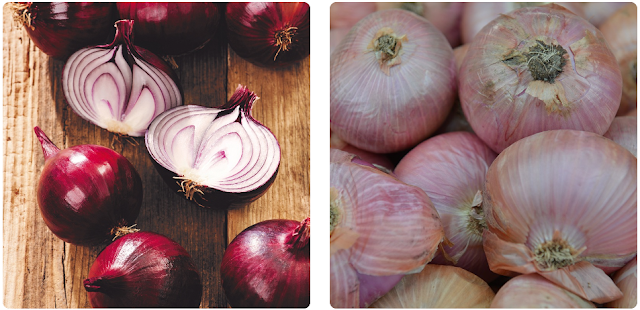
At the moment I have not selected any sets, but my daughter prefers Red onions and l normally grow a selection of colours. 

Varieties of onion sets I have grown in the past include:-
 
Karmen from Mr Fothergill's. 

Pink Panther from Mr Fothergills 

Snowball from Mr Fothergills 


Wednesday, 29 January 2025

Organic Onion (Spring) Crusado F1

The Organic Gardening Catalogue have kindly sent me a 250g bag of Onion ‘Crusado’ F1 seta that they have added to their catalogue this year. It is a high performing variety exhibiting improved yields, quality and disease resistance. Which is the result of years of intense breeding by the renowned seed company Hazera,  

Crusado is a relatively early, long-day hybrid giving high yields of uniform, yellow-brown, round onions that are easy to chop whilst minimising wastage. This easy-to-grow variety features tough skin, thin necks and a very strong root system enabling it to outperform other varieties in dry conditions.  

One of the longest storing of white onions, the bulbs will store for several months and retain excellent quality. An excellent choice for the beginner or seasoned grower providing a bounty of well-flavoured, superb quality onions for long term use. Height: 45cm (18in). Spread: 15cm (6in).

Plant onion sets in rows in any firm, well-drained soil in full sun. Prepare the planting area several weeks in advance by incorporating some well-rotted garden compost to improve drainage and soil fertility. Avoid planting onions on freshly manured soil. 

On particularly wet ground, try growing onion sets in raised beds. When growing onions from sets, plant the bulbs so that the tip of bulb is just protruding through the soil surface. Leave a space of 100mm (4") between each bulb, and 300mm (12") between each row.


Thursday, 31 October 2024

How To Grow Onion Shallot and Garlic

It's a good time to buy Onions from Marshalls

Guidance supplied by Marshalls  

Every kitchen should have fresh supply of Onions, Shallots and Garlic, adding intense flavours to a huge range of kitchen dishes. Growing them is a pleasure and simple to do. Follow these guidelines for your own harvest of these delicious and versatile vegetables. Planting sets and cloves will give you a great harvest but can be slow to establish and birds do like to pull at them to get to the earthworms below, that have been attracted by the explosion of microbial activity in the rootzone. Using pre-rooted sets and cloves gets the plants off to a quicker start, leading to larger and earlier crops. Plus a lot harder for the birds to pull them up too!

Prepare the soil: Onions, Shallots and garlic prefer an open, sunny site and light, free-draining soil. If you have heavy soil, dig a generous amount of grit and organic matter into the planting area to ensure better drainage. Avoid planting in very heavy or freshly manured soil. Onions are sensitive to acidity, so if you have acid soil add some Garden Lime to the area well before planting, or a Pre-planting Onion, Shallot and Garlic Fertiliser.

Planting: Both autumn and spring varieties can be planted straight outside into prepared soil. Loosen the soil and dig in some Pre-planting Fertiliser for added nutrients.

Plant onion and Shallots with the tips of the sets showing at the soil surface. Onions should be spaced 5-10cm (2-4in) apart with 25-30cm (10in to 1ft) between rows, and shallots 15-20cm (6-8in) with 30-45cm (1ft to 18in) between rows.

Garlic cloves should be planted so the tip of each clove is 2cm (1/2in) below the soil surface. We suggest leaving 15cm (6in) between individual cloves and 30cm (12in) between rows. Plant pre-rooted plugs deeper than the plug they are grown in.

Aftercare: During the growing season, water if the weather is dry and give an occasional feed with a general liquid fertiliser, and keep the area weed free. Keep the water going in especially towards harvest time, as the bulbs can almost double in size in the last 4-6 weeks before harvest.

You might not know, but hardneck garlic varieties may produce a curly flower stem (commonly known as a scape) and cutting this off can increase the bulb size. The scape has a fresh, garlicky flavour that is absolutely perfect for stir fries!

Harvesting: Onions and Shallots can be lifted fresh in summer as soon as they reach a useable size, however if you’re harvesting for storage we recommend waiting until the foliage bends over and dies down naturally before lifting.

When harvesting garlic, we’ve found that a good indication is when their foliage starts to turn yellow and wither. Use a fork to gently remove the bulbs from the ground.

To lift, you should ease your bulbs out of the ground and allow them to dry outside for a couple of weeks (if the weather is fine) or in a well-ventilated greenhouse or shed.

Storing: Onions, shallots and garlic are ready for storage when the skins are completely dry and papery. They should be kept in a light, cool and well-ventilated place. Onions can be braided into long bunches and hung up to improve length or harvest and look great too!

Pests and Diseases: Onions are prone to various fungus-borne diseases, so we recommend trying to rotate their growing position each year so you’re not planting in contaminated soil.

Here are some of the most common pests and diseases to look out for!

Rust disease – Rusty spots form on both sides of infected leaves and break open to release dusty, orange airborne spores. Severe attacks may cause the leaves to shrivel prematurely and will reduce vigour.

Unfortunately, there is no solution or cure to rust disease. We recommend keeping a close eye out for the signs and removing and destroying any infected plants to help it spreading.

Onion white rot – The leaves will start to turn yellow and wilt, which prevents the bulbs from forming properly. A good way to tell if the bulbs have been infected is they will have white, fuzzy spots.

We recommend watching out for rot and removing any infected bulbs from the area to prevent it spreading.

Onion fly – The leaves will start to wilt and turn yellow, preventing the bulbs from developing. Onion fly can affect garlic and leeks as well as onions. The larvae of onion fly live in the soil and eat the roots of the bulb, eventually burrowing into the bulb itself.

Protect your crops with Insect Netting. However, if you do have issues with onion fly, we recommend simply discarding any bulbs.

Onion downy mildew – The leaves will begin to turn yellow and die off from the tip downwards. In wet weather, white mould develops on dead parts often turning a darker colour later. Remove and destroy any affected bulbs.

Onion neck rot – This fungal disease can occur in storage. We have found that to avoid neck rot, you should water regularly and stop feeding in August, in addition to keeping your crops dry after harvesting.

Thursday, 11 April 2024

3rd Bed Of Red Baron Onions


A swift visit to the allotment late this afternoon with Emma to get the next onion bed ready and 105 more Red Baron Onion Sets planted, watered them in and gave the other two beds of onions a drink.

Again I've leaned the inner hoops in opposing directions so when the wind blows one hoop goes into Tension and the other in Compression and hopefully the structure remains upright and does not start leaning or falling over one way or the other.


Hoops & Debris netting fixed to keep the birds and mice out. The mice have been pulling Andy's sets up and gathering them in a pile on his plot. The pile of hoops needs to be distributed four to a bed ready for when whatever goes into the bed can be covered over. The aim at the end of this year, is to have all the beds covered for the winter months with the hoops and lateral bracing members there ready for action for next year.    


I need to get some weed killer for the bind weed that is making its way up my cantilever runner bean or French climbing bean frame. Bind weed is also making its way up my grapevine, that needs to be dealt with my hand, however the problem is at the moment I can't get down that low to deal with it. 

Third bed on right is what is left of a bed load of broad beans that were over Wintered, I will not be making that mistake again, Next visit loads of beer traps, and blue pellets of death to be put out all around the plot. 

Saturday, 6 April 2024

Getting The Onion Sets In


The aim today was to go the allotment in the morning, find as many of the 105 hole planting membrane sheets as possible, plant the Blue Suede Blueberry (Vaccinium) plant, come home for lunch and then return in the afternoon with Emma to plant as many beds of onions as we could. 

Ericaceous compost used for Blueberries, tamped down into a square flower bucket with drainage holes made with a soldering iron 10mm up from the bottom so it can hold water at depth. 

I used a pot the same size to form the perfect hole in the compost for the plant to be placed in. 


Plant firmed in then a covering of more Ericaceous compost. I have 3 more blueberries ordered and they will be going behind the climbing frame greenhouse.


Emma and I got the first two beds of Onions in before the rain started this afternoon, Strawberries Covered with debris netting, this morning Blueberry plant potted up, and rubbish taken to the skip.

Thanks to Wally for his assistance this morning getting the old rusty incinerator with a broken chimney and no bottom anymore and all the contents into the skip, in the drop off and pick up area. (aka the Car Park)


Beds 4 5 & 6 had been ear marked for the onion sets, however two Daleks were placed on bed 5 last year and both were filled to the very top as the vegetation of the allotment was stripped back.


Photo of Beds 5 last year. These two Dalek were continually topped up with greens and browns including coffee grounds and comfrey and were topped off with shredded paper.

Note to self

Always top of with greens as the the very final layer had not completely decomposed but both bins are now only half full showing that nature has done it's magic and I have some nice compost to extract from these bins to be used on the potatoes in buckets this year.

As a result of Bed 5 still having the Daleks on, an alteration to the plan in that beds 11 to 14 will now be Onion Sets and the brassicas planned for those beds will now go into beds 4 to 6 and possibly 7.


With the change in plan Beds 14 & 13 both now have 105 Red Baron Sets in each bed and I need to clear bed 12 ready to get another beds with in, plus I need to make two more 105 hole Planting Membrane sheets.


The beds in the greenhouse climbing frame need weeding and the return bed needs completing before the need to plant in there is with us so that's a job on my to do list. The mesh panel was put in place as Mr Fox had been in there and dug in the bed.


The area behind the greenhouse climbing frame needs to be cleared of weeds and a floor of woodchips needs to go in as that will be where the Blueberries will go so that I can net it to keep the birds off them.

Wally took the Rhubarb from the bed that I have now planted strawberries in and have put some netting over to keep the squirrels out off because last year they ate and dug up my plants.

Sunday, 9 April 2023

Climbing Frame Greenhouse and Onion Sets


View from the potting shed / path onto plot 1
 

Emma and Andy came today to give me a hand on the allotment. Andy helped me construct the Greenhouse Climbing Frame and Emma planted Karmen, Pink Panther and Snowball onion sets from Mr Fothergill's, in 3 beds. 


View from the Main Path 

I have a number of concrete kerb stones that I have harvested off Freecycle and they will form the raised bed that will go around the inside of the climbing frame. At the moment they are just positioned so I can see where they need installing. 


View from the water tank on the main path


Gable end view from main path


Emma working planting Karmen, Pink Panther and Snowball onion sets from Mr Fothergill's, in 3 beds.


Karmen, Pink Panther and Snowball onion sets from Mr Fothergill's, in 3 beds.


Scaffolding Debris netting to stop the birds and squirrels from pulling the sets out.

Friday, 10 February 2023

In My Seedbox for 2023 - Onion Sets


This year I have gone for a 250g pack that contains around 80 sets for planting of Karmen from Mr Fothergill's. 

Karmen have an exceptionally sweet taste that makes this red onion perfect for salads, sliced on top of burgers, or any cooked dishes that require a light, sweet onion.  Crisp white flesh with crimson circles. 

Karmen £4.95 item code 56170


New to Mr Fothergill's this year are Pink Panther onion sets which are a sought-after variety, which produces a generous crop of tasty, somewhat flat-topped onions. Unusual pink skinned variety, its red flesh has a mild, sweet flavour when cooked – and if you have more than you need, they will last well when stored.

There are approx. 80 sets per 250g pack and I have ordered 2 packs so that's approx. 160 sets 

Pink Panther - Cost £5.95 a 250g pack - Item code 56629


Mr Fothergills Snowball is a superb white variety, excellent for culinary use with a full mild flavour. Produces attractive, bright white bulbs with white flesh. Height: 45cm (18"). Spread: 15cm (6").  Stores well. There are approx. 75 sets per 250g pack. and I have 2 packs 

Sets planted in the spring should be ready for harvesting from late summer/early autumn. 

Snowball £4.95 item code 42382


  80 Carmen
160 Pink Panther
150 Snowball 
------
390 Onions with 105 per bed I need more than the 3 beds I have allocated this year  390 - 315 = a bed or area to take 75 Onions needs to be found!


Wednesday, 9 November 2022

In My Seedbox for 2023 - Onion Sets

Last year I bought an Autumn Planting Onion Set Collection from D.T.Brown which included 3 x 250g each (80 sets approx.) of Radar £3.95, Electric £3.95 and Snowball £3.95 = £11.85 Reduced by £2 to £9.85 and the weekend I bought them when there was a code for free post and packing.


This year I'm getting Mr Fothergills Red Karman & Pink Panther Sets

Red Karmen & Pink Panter are both selling at £4.25 for 250g at the time of blogging this (Nov 2022)

Karmen has an exceptionally sweet taste that makes this red onion perfect for salads, sliced on top of burgers, or any cooked dishes that require a light, sweet onion.  Crisp white flesh with crimson circles.  

Pink Panther are a sought-after variety, which produces a generous crop of tasty, somewhat flat-topped onions. Unusual pink skinned variety, its red flesh has a mild, sweet flavour when cooked – and if you have more than you need, they will last well when stored.

No kitchen garden is complete without onions.  All of Mr Fothergills bulbs are certified as disease and virus free.

250g pack typically contains around 80 sets for planting so using the 105-hole planting membrane that's at least two beds of onion sets for 2023.

Both Onion sets get Despatched From the 10th January 2023.


In My Seed Box For 2023 - Index

Saturday, 22 January 2022

More Onion Sets

I have a bed and a half of onions over wintering and I still have a bed and a half of space for more onions. So I have on order from D.T.Brown approx 160 onion sets:-


D.T. Brown Heat Treated Cupido Onion Sets


Botanical Name:
 Allium cepa

Pack quantity: 250g Pack

Item code: 54035

Despatch: From 22nd March 2022.

Price: £3.95 at time of this blog posting


A recent introduction that is becoming increasingly popular amongst commercial growers. Giving a high yield, it produces consistently round onions with an attractive golden yellow colour. With a perfect slightly sharp taste and crispness this variety will keep you going right through the winter as stores well.

Heat treating our onion sets is rather like turbo-charging them! This totally natural process takes several months, but the process means they establish and grow very rapidly, giving higher yields - and with virtually no risk of prematurely running to seed or 'bolting'.

All of D.T.Browns bulbs are certified as disease and virus free.

Delivered in 250g packs, each pack containing approx. 80 sets.


D.T. Brown Onion Karmen sets

Pack quantity: 250g Pack

Item code: 56169

Despatch: From 22nd March 2022.

Price: £3.95 at time of this blog posting...

New for 2012   Variety to D.T.Brown 


An exceptionally sweet taste that makes this red onion perfect for salads, sliced on top of burgers, or any cooked dishes that require a light, sweet onion. Crisp white flesh with crimson circles internally.

No kitchen garden is complete without onions - and planting our sets this spring means you will have a supply early this summer just as stored bulbs are scarce.

All of our bulbs are certified as disease and virus free.

250g pack contains around 80 sets for planting.

Sunday, 7 November 2021

Alan & Andy On The Plots


The weather today was so mild for this time of year, we were blessed with some sun and we actually ditched the coats and ended up working in our tee shirts. The bed Andy is raking is the one that had the main crop potatoes in. The potatoes were very small and mot really what I was expecting. There are so many small spuds in that bed the we will suffer from some volunteers next year from that bed. 


Andy and I took different sides of the bed and dug and raked the soil over a number of times in order to extract as many mini and micro spuds. I dressed the bed with Natural Grower and then moved onto prepping the bed two down ready for onions.


I had anticipated the need for two and a half beds but at the end of the day we used all but two rows 14 of the 210 holes in the two bed planting membrane. 


Electric A really attractive addition to the early summer salad bowl with beautiful red skin and flesh. The family cook will want to use this beautiful onion in a wide range of dishes. Just the job for a cheese and onion flan. Quite a large onion set and only 34 onion sets in the bag, I was a little disappointed but they were bought by weight and not quantity. 

Radar If you experience severe winters, try ultra-hardy Radar as it puts up with the worst of the weather much better than many older varieties. This outstanding performer has a mild and crisp flavour. There were 76 onion sets .

Snowball White skinned, as its name suggests, Snowball has a lovely, mild flavour and the bulbs keep well. A great choice for baking whole with the Sunday roast! There were 86 onion sets. 


Hoops and Nets installed to keep the foxes out of the bed and the birds from thinking the top of the onions are worms or something else they may like to eat. No water on the site now as it's always turned off a couple of weeks before bonfire night. So good thing that I have full water butts on the greenhouses. 

The stall holder clips hold the netting nicely in place and paving blocks have been used along the ends.


The bed in the background on the left next to the netted bed, was cleared of weeds by Andy and the netting transferred onto the bed on the right which has the onions in. 


The tomatoes plants had taken a hit from the frost a couple of days ago and so all the green tomatoes were harvested and brought home to go into the Space Saver Greenhouse. Job for another day is to remove the wigwams and put the Winter weed membrane over the two narrow plots.

It was nice working with my son-in-law today, we work well together and he did all the sowing saving me from having to keep getting up and down on the kneeling stool. We enjoyed a break half way through the morning with a cup of coffee each and a few Jaffer cakes.  

Thursday, 4 November 2021

Onion Sets

My Onion Sets order arrived on Wednesday 3rd November along with this guidance on a A5 portrait sheet of paper. 

After unpacking, put them into a cool, light, well-ventilated and frost free place, away from direct sunlight.

Winter hardy varieties can be planted in early autumn, otherwise plant between February and April, as soon as the soil is sufficiently dry and warm; in practice this is usually late winter or early spring for sandy soils, and mid-spring for clay-based soils. Heat-treated sets (which have had their flowering potential suppressed, so are bolt resistant) should not be planted before late March or April.

Prepare the soil by digging over and incorporating some general-purpose fertilizer, work the soil down to a fine tilth as if preparing a seed bed.

Care & Cultivation Of Onions & Shallots

Onion and shallot sets are planted into a shallow drill (groove) in the soil, created with a string line and a draw hoe, or by laying a plank across the bed and running a trowel along its edge. The drill should be about the same depth as the set, or a bit less for some of the longer sets (many shallots, for example).

Remove any loose papery skins before planting the sets. Push the sets into the soil at the base of the drill, with their pointed tips upwards. Spacing can be anything from 2.5cm (1in) to 10cm (4in) apart, depending on the size of bulbs. Closer spacing results in large numbers of small bulbs, whereas wider spacing results in a smaller number of large bulbs; 5-7.5cm (2-3in) usually works well.

Fill in the drill with soil by running the edge of the rake along its edge to draw soil over the sets, or use the trowel in a similar fashion. Use the trowel to firm in the sets. When they are planted, the tips at least should still be protruding from the soil surface.

In the spring there is rarely the need to water newly planted sets. But in dry spells later on in the summer and autumn, new plantings of overwintering onion sets should be watered in after planting.

Keep weeds checked as dense weed growth will seriously affect yield. Water if the weather is dry (not otherwise) and feed occasionally. Feed an autumn-sown crop with a liquid fertilizer in March.

Onions form a bulb when the temperature and the number of daylight hours hit the right combination for them which triggers their clock. Until that happens, onions use the daylight to produce a good deal of top growth before they form bulbs (and the more top growth, the bigger the bulb). When the day reaches the right number of hours for that variety of onion, the onion will stop forming top growth, and form a bulb instead. The size of the bulb that eventually forms depends on the size of the "stalks", and the number of them. There will be 1 ring in the onion for every stalk that formed, and the larger the stalk, the larger each ring will be. Bulb formation will pause though during dry, very hot or very cold weather.

Break off any flower stems which appear. Mulching is useful for cutting down watering and for suppressing weeds. Stop watering once the onions have swollen and pull back the covering earth or mulch to expose the bulb surface to the sun.
When the bulb is mature the foliage turns yellow and topples over. Leave them for two weeks and then carefully lift with a fork on a dry day.

Onions which are not for immediate use must be dried. Spread out the bulbs on sacking or in trays; outdoors if the weather is warm and sunny or indoors if the weather is wet. Drying will take 7 to 21 days, depending on the size of the bulbs and air temperature. Inspect the bulbs carefully: all soft, spotted and thick-necked onions should be set aside for kitchen use or freezing. The rest can be stored.

Store in trays, net bags etc; anything where the air can circulate. Choose a cool and well-lit place to store them where they will keep until late spring.